What LTL Freight Shipping Really Costs Per Pallet Once Accessorials Land
What LTL Freight Shipping Actually Covers
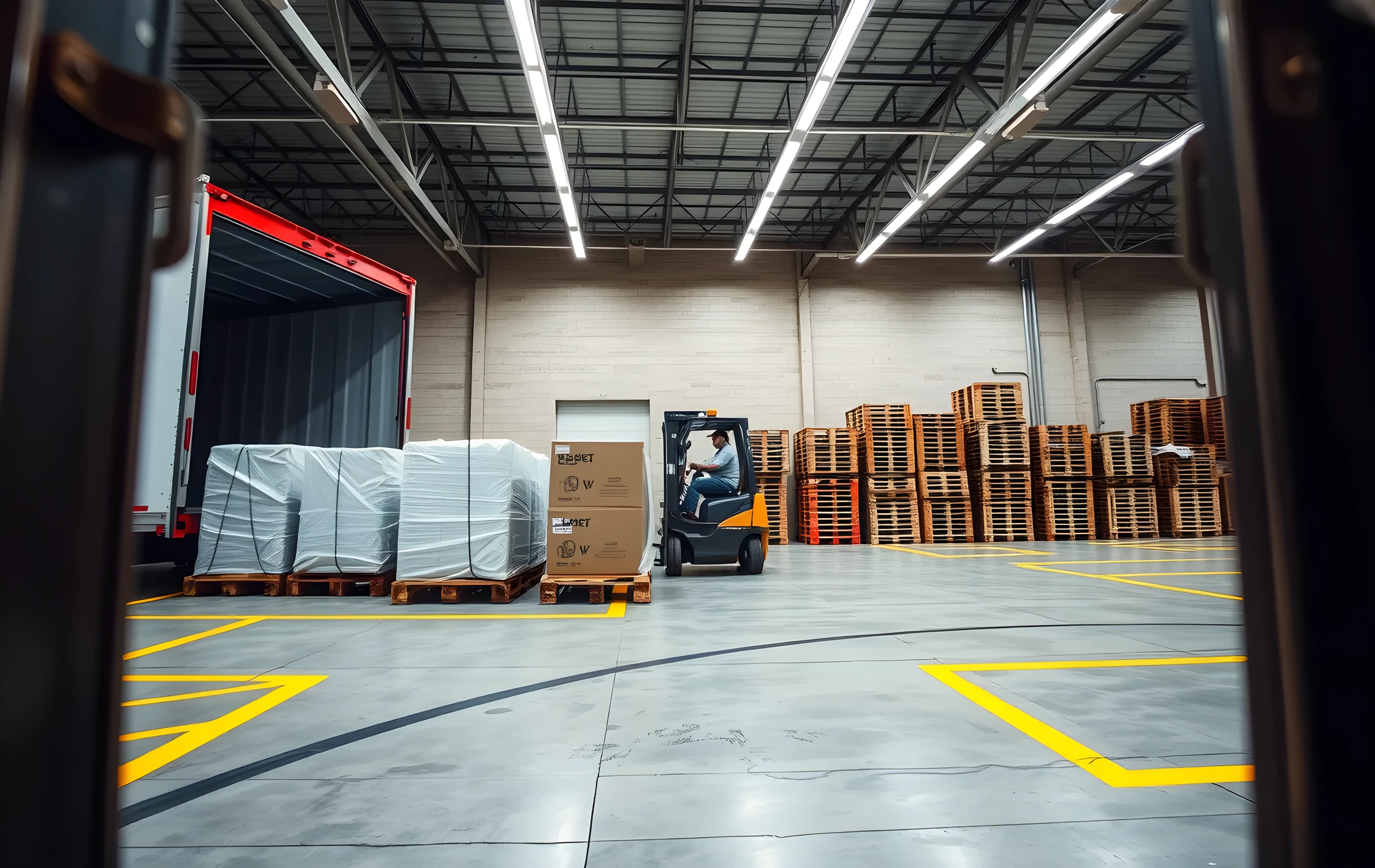
Less-than-truckload shipping means your pallet shares trailer space with other shippers' freight. The carrier consolidates loads at a hub, runs the line-haul leg, deconsolidates, and delivers each pallet on its own local run. For an online store, LTL is the mode that kicks in once a single order exceeds what a parcel carrier will take: typically above 150 pounds or beyond the dimensional limits of ground shipping. A pallet of commercial cleaning supplies, a set of modular shelving, a bulk case of specialty chemicals, these all ride LTL.
The practical boundary for most stores sits between 150 and 1,500 pounds per shipment, or anything with a single dimension over four feet that parcel networks refuse or price at absurd rates. Below that threshold, ground parcel is simpler and cheaper per pound. Above roughly 2,000 to 3,000 pounds, you start comparing against full-truckload or team-driver pricing. The LTL sweet spot is the awkward middle: too heavy for FedEx Freight's small-package lane, too small to justify a dedicated van.
The Accessorial Charges That Eat Your Margin
The base line-haul rate, quoted by weight class, distance, and commodity code (NMFC), is usually the least of your expenses. What actually inflates a 1,200-pound pallet from a $380 quote to a $540 invoice are the accessorials. Liftgate delivery adds 40 to 90 dollars when the receiving dock has no forklift. Residential delivery tacks on another 30 to 70 because the driver is leaving a commercial route. Inside-delivery, where two people carry the pallet beyond the threshold, can add 150 or more. Detention charges kick in at roughly 45 minutes of free time at either terminal; every additional half-hour bills you the carrier's hourly rate.
There are also the quieter ones: a fuel surcharge that floats weekly and can swing eight to fourteen percent off the base rate, a handling fee for odd-shaped or over-dimensional pallets (anything over 108 inches in any dimension or 54 inches wide triggers it), and a stop-fee if your customer needs a drop at an address outside the carrier's standard delivery radius. None of these appear on the initial quote you pulled from the carrier's website. They surface on the invoice, three to five days after the truck was delivered, and by then the money is gone.
The operator math that matters: if your average LTL order lands at 18 percent of COGS once accessorials are included, and your store margin on that product line is 22 percent, you are effectively selling it for free after freight. Track this per-SKU, not per-order. A pallet of dense steel components might ride LTL at a six-percent freight-to-COGS ratio, while the same cubic feet of foam packaging materials hits 35 percent because the weight class is light and the dimensional surcharge dominates.

Building an Accurate Quote Into Your Fulfillment Flow
The workflow problem most stores face is that LTL quoting happens outside their order system. A customer orders, the warehouse picks and palletizes, and then a person opens a carrier website, types origin and destination, enters weight and dimensions, and reads off a number. That step takes four to seven minutes per shipment, introduces transcription errors on commodity codes, and means the customer has already seen a shipping estimate that was calculated with zero knowledge of accessorials. The gap between what you quoted at checkout and what the invoice says is where support tickets are born.
A tighter loop works like this: the moment an order crosses the LTL threshold in your platform, the system pulls weight, dimensions, origin ZIP, destination ZIP, and commodity code into a rate query against two or three carriers simultaneously. The returned quote includes base line-haul plus a standard accessorial assumption, liftgate yes, residential yes, fuel surcharge at current published percentage. You round up to the nearest five dollars and present that as the shipping cost at checkout. The customer sees one number. Your warehouse ships with those terms pre-selected on the pro forma so the carrier cannot add charges later without a documented exception.
The time savings are real but secondary. Four minutes per LTL order, say twelve of them a week, is under an hour of operator labor per month. The primary win is that your shipping estimate at checkout matches the final invoice within five to eight percent, which means you stop fielding 'why did my freight charge triple' tickets and stop issuing refunds that quietly erode your take rate.
Why Customers Cannot Find Your LTL Shipping Terms
Here is the findability problem in plain terms: a customer in Phoenix wants to order four pallets of commercial-grade epoxy floor coating and needs to know, before they commit, whether delivery includes liftgate, how long transit will take from your Ohio warehouse, and what happens if their receiving dock is closed on arrival. They open ChatGPT or Perplexity, type the question, and get a generic answer about LTL carriers in general. Your store's shipping policy page, buried three clicks deep under 'Policies' in the footer, never surfaces. You lose the order to whichever competitor's terms were more visible in that AI-generated response.
AI search tools now compose answers by pulling from structured, crawlable content. If your shipping policy is a 400-word block of legal language on a page with no heading hierarchy and no per-mode breakdown, it does not get cited. What does get cited: a clean 'Shipping & Delivery' page that says, in plain sentences, 'Orders over 150 pounds ship via LTL freight. Transit is three to six business days depending on destination. Liftgate delivery is included at no extra charge. Residential stops are included. Detention beyond 45 minutes at our dock or your receiving terminal is billed at the carrier's standard rate.' That paragraph, indexed and specific, is what an AI overview will lift and show to the buyer before they ever visit your site.
The same logic applies to your product pages. If a SKU ships as LTL, state it on the page alongside the weight, dimensions, and a realistic transit window. 'Ships via LTL pallet freight, 3-6 business days, liftgate included.' That sentence costs you nothing to write, takes zero workflow time to maintain, and is the difference between being the answer an AI tool recommends and being invisible in the results.
Choosing Between LTL and Parcel at the Pallet Line
The decision is not purely weight-based. A 180-pound box of dense metal fasteners will cost less on parcel ground because the dimensional weight penalty that plagues LTL does not apply, the box fits a single parcel dimension and the carrier charges by actual weight. But a 140-pound pallet of expanded polystyrene insulation panels, with a four-foot dimension and low density, will be quoted at two or three times its actual weight on LTL because the rate class is volumetric. Here, parcel ground, if it accepts the dimensions, or a regional van carrier, may beat LTL by 20 to 35 percent.
The rule that keeps your fulfillment flow clean: set a hard weight-and-dimension threshold in your order system. Above 150 pounds AND any dimension over four feet AND total volume above a defined cubic-footage number, route to LTL. Below all three, route to parcel or regional ground. In the gray zone, say, 160 pounds with one dimension at exactly four feet, default to whichever carrier's published rate for that specific NMFC class and lane is lower, which means your quoting step (the automated one from the previous section) makes the call, not a warehouse worker standing over a pallet wondering where it belongs.
One final operational note: LTL carriers bill by hundredweight in minimum increments, and a 149-pound shipment pays as if it weighed 200. If your product line includes items that cluster just under a hundredweight boundary, check whether bundling two orders onto one pallet, same destination, same delivery window, drops the combined weight into the next class at a lower per-pound rate. The math only works when you can see both orders simultaneously, which means the decision has to live in your fulfillment software, not on a clipboard.