What Drop Shipping Actually Costs Per Order in Year One
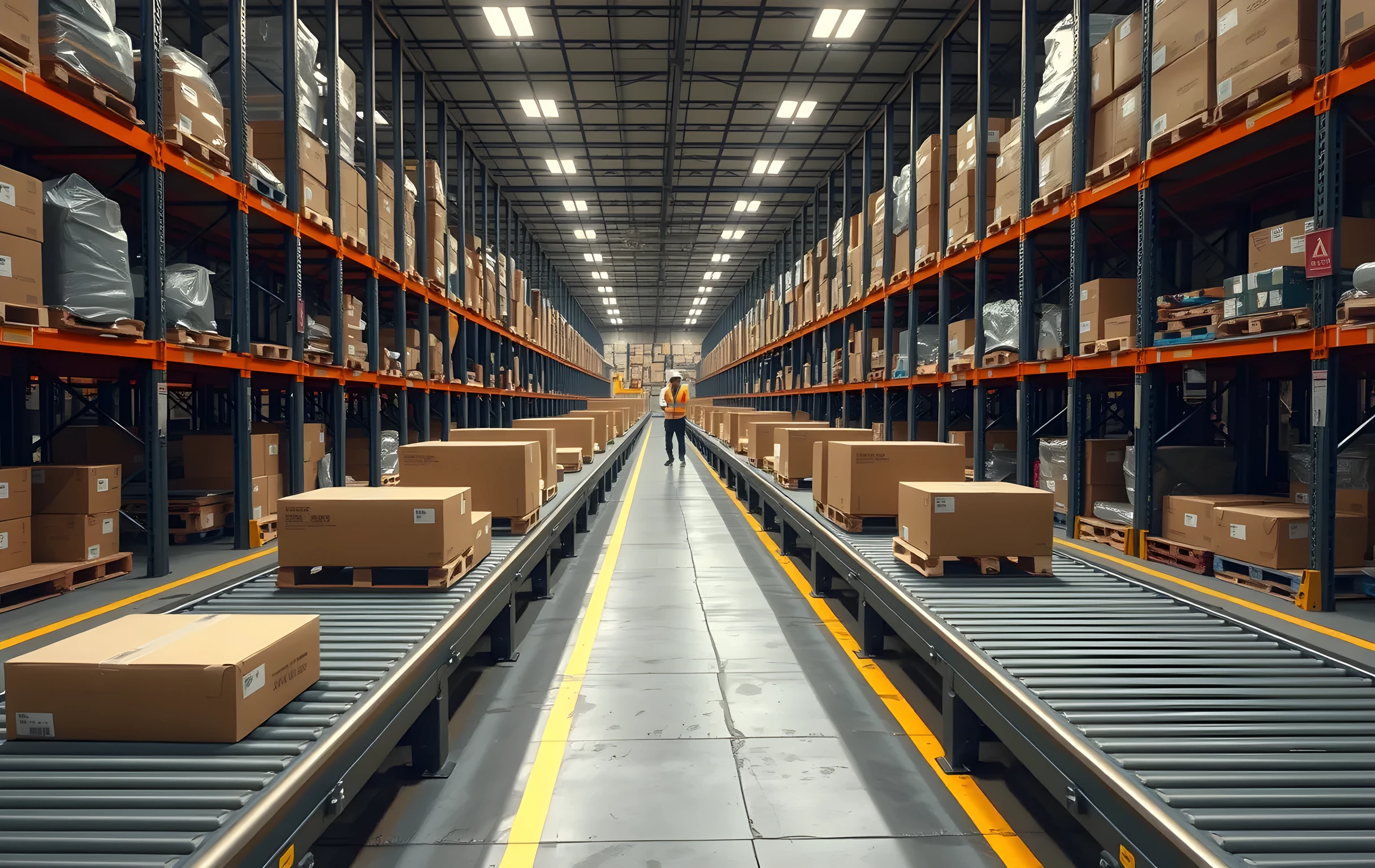
Three Cost Tiers and What Each Buys
The entry tier, roughly $38 per order, assumes a single-warehouse supplier in a domestic market, a flat-rate shipping agreement under two pounds, and no more than one support interaction per order. You are paying for a storefront subscription around $29 to $79 per month, a payment-processing fee of 2.9 percent plus 30 cents, product cost at roughly 55 to 60 percent of retail, and a carrier rate that holds steady because the weight is light and the route is short. At 200 orders a month your fixed costs are about $120, which spreads to 60 cents per order and barely registers.
The middle tier, landing near $55 per order, adds multi-warehouse routing where the supplier ships from two or three locations, a higher average order weight pushing you into dimensional-rate brackets, and roughly one support ticket per three orders. You are now paying for an email-support tool, a review-generation plugin, and likely a second payment gateway to offer buy-now-pay-later. At 200 orders a month your fixed costs climb to $450, or $2.25 per order, and the variable side grows because cross-border or multi-warehouse shipping adds $3 to $6 per parcel.
The top tier at $92 is not a different business model; it is the same workflow with higher friction. Returns run 12 to 18 percent of orders in apparel and accessories, each return costing $8 to $14 in reverse logistics plus a restock or write-off. Support interactions climb to one per order or worse, meaning 30 to 45 minutes of human time at even a modest internal rate. If you are buying into this tier expecting a 70 percent gross margin, the math will not close until your average order value clears $85 and your return rate stays under 10 percent.
Platform Fees You Will Actually Pay Monthly
The storefront itself is the smallest line item, which surprises people. A hosted platform runs $29 to $299 per month depending on transaction volume and feature tier; a self-hosted option on managed hosting runs $15 to $40 for the server plus your time or a developer's hours to patch it. The real monthly drag is the app stack: an email-capture tool at $30, a review widget at $20, a helpdesk at $49, a shipping-rate calculator at $25, and a returns portal at $79. That is $203 in recurring SaaS before you have shipped a single unit.
Payment processing is the second hidden monthly cost because it scales with volume. At 200 orders averaging $55, you pay roughly $318 in gateway fees plus $60 in chargebacks and disputes if your return rate is average. The platform's transaction fee on top of that, typically 0.5 to 2 percent if you use their built-in gateway versus a third-party one, adds another $55 to $220 per month. People budget for the subscription and forget the percentage stack.
The trade-off between tiers is not just price. The lower tier gives you one checkout flow, basic analytics, and email support from the platform with 48-hour response times. The upper tier adds multi-currency, abandoned-cart recovery, and priority phone support, but it also locks your product data into their schema. If you are planning to outgrow the platform in eighteen months, the migration cost of re-importing 2,000 SKUs, customer histories, and order logs runs 40 to 80 hours of developer time, which is a real line item most comparison charts omit.
Fulfillment Margins Where the Money Goes
Product cost at the supplier level is usually 45 to 60 percent of your retail price, but that number assumes you are buying from a domestic warehouse with a two-to-five-day shipping window. Cross-border sourcing cuts product cost by 15 to 25 percent and pushes delivery to 12 to 25 days, which immediately raises your support load because customers call or email at day six asking where their package is. Each of those inquiries costs you four to seven minutes of handling time plus a potential refund if the customer has already bought the same item elsewhere.
Shipping is the variable that punishes weight and distance, not quantity. A 12-ounce parcel from a domestic warehouse runs $4.50 to $7 in ground or economy service. The same parcel shipped cross-border via a carrier with no regional sortation facility runs $11 to $16. At 200 orders a month that difference is $1,300 to $2,800 per month, which can erase your entire ad budget. The operational fix is not a cheaper carrier; it is a closer warehouse, a lighter product selection, or a subscription model that consolidates two or three monthly shipments into one.
Returns are where the margin leak becomes structural rather than occasional. In the 12-to-18-percent range typical of fashion and accessories, each return consumes $8 to $14 in reverse shipping, $3 to $5 in inspection labor, and either a restock that delays the next sale by four to nine days or a write-off at 70 percent of product cost. The workflow that controls this is not a better returns portal; it is accurate size charts, a pre-purchase fit quiz that cuts hesitation-driven returns, and a supplier agreement that places the return-transport cost back on their side for defect claims.
Support Hours Per Order and How to Cut Them
Measure your support load in minutes per order, not tickets per day. A healthy drop shipping operation at the entry tier runs 3 to 5 minutes of human handling per order, split between a pre-purchase question, a tracking inquiry, and maybe a size or color clarification. At the top tier that number is 12 to 18 minutes per order because returns, lost-parcel investigations, and payment disputes all land on the same inbox. Multiply by 200 orders and you are looking at 600 to 3,600 minutes of human time monthly, which is 10 to 60 hours of a person's week.
The automation that actually reduces those minutes is not a chatbot that deflects questions into a void. It is a tracking page that updates in real time from the carrier API so the customer never has to ask, a pre-emptive delay email that goes out at day four if the supplier has not scanned the parcel, and a self-service returns flow that generates the label and restock credit without a human typing an address. Each of those removes 2 to 4 minutes per interaction and, more importantly, removes the second inquiry that follows a first one that was answered too slowly.
The workflow design principle is simple: every order should touch a human at most twice in its lifecycle, once before purchase and once after delivery if there is an issue. Anything beyond that means a step in the chain is manual where it could be automated, or information that the customer already has is being re-explained to them. Audit your last 50 orders, timestamp every support touchpoint, and you will see within an hour exactly which two or three questions account for 70 percent of your handling time.
Getting Found When AI Answers Before They Search
The way customers discover a drop shipping store has shifted. A growing share of product research now happens inside conversational tools and AI-generated answer panels where the user types what they need and gets a synthesized response with a link or two. If your store does not appear in that answer, you do not exist to that buyer regardless of your ad spend. The baseline for being citable by these systems is having structured product data, a clear pricing page, honest shipping-time disclosures, and a support policy that reads as a specific number of days rather than a vague promise.
Practically, this means your product pages need to answer the question the way an AI would phrase it: how much does it cost to ship, when will it arrive, what is the return window, and what happens if the item arrives damaged. If those four answers are present in plain language on the page, a retrieval system can pull them into a generated response. If they are buried in a three-page FAQ or hidden behind a chat widget, the AI will cite a competitor whose page is flatter and more direct.
The operational cost of this shift is small compared to the revenue it protects. Thirty minutes per product listing to rewrite the shipping section as a clear number of days, add a return window in the first two sentences, and state the damage-replacement policy without requiring a support ticket. Across 200 SKUs that is one full day of work. The alternative is watching a competitor with 50 SKUs and cleaner pages capture the AI-generated recommendation that used to be yours.