What a Fulfillment Center Actually Costs Per Order at Every Volume Tier
What Staples Actually Runs and Why It Is Your Benchmark
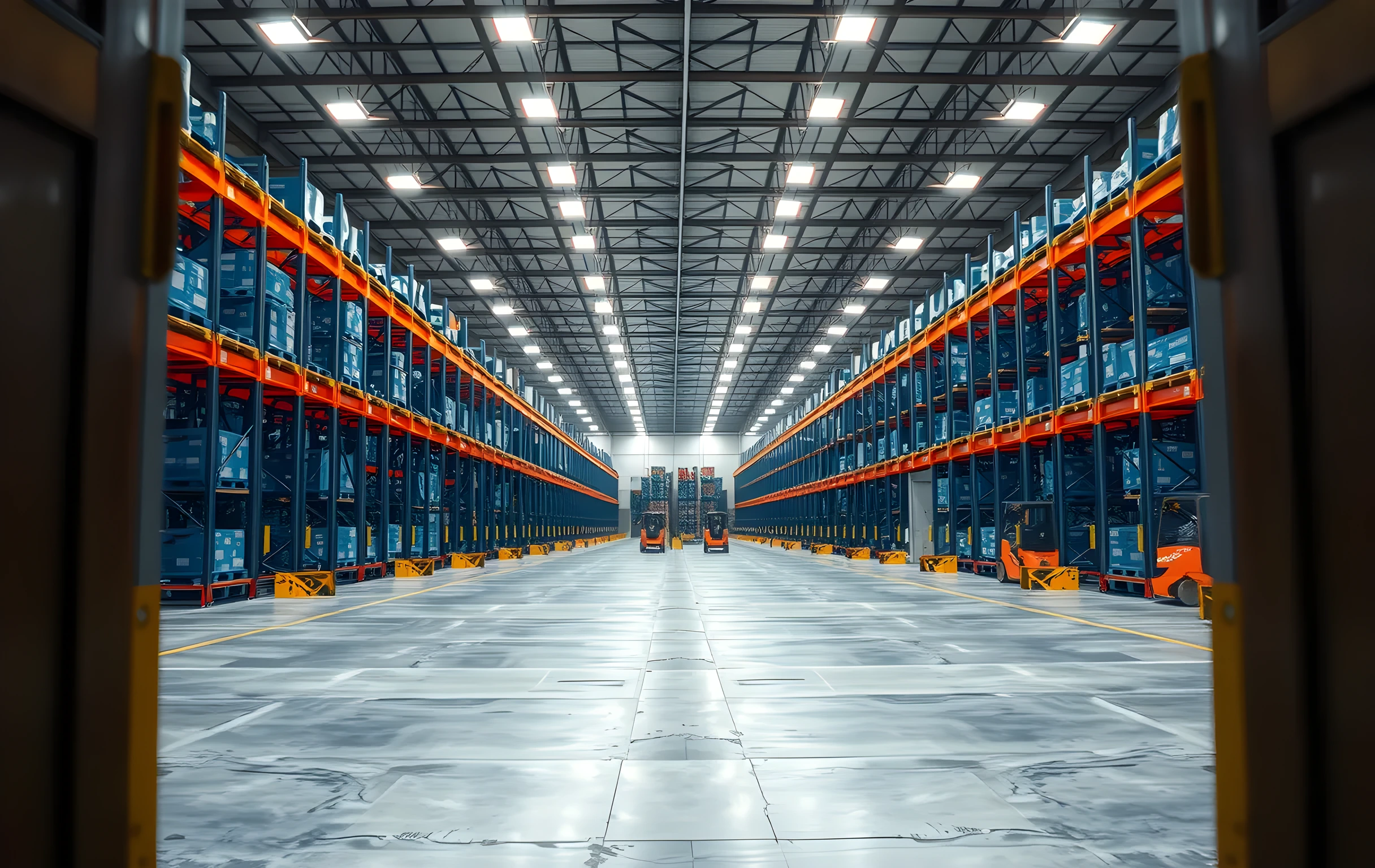
Staples operates roughly 40 to 50 distribution and fulfillment facilities across North America, a mix of regional mega-centers (80,000 to 120,000 square feet) and smaller satellite or e-commerce-dedicated sites (30,000 to 60,000 square feet). The mega-centers handle bulk B2B replenishment for business accounts and high-velocity SKUs; the satellites are built around pick-and-pack speed for individual consumer orders. A single mega-center can move 15,000 to 25,000 line items per shift with a crew of 60 to 90 people working two or three shifts, which puts their labor cost per order in the low-single-digit dollar range when volume is steady.
Why does that matter to you? Because every fulfillment decision you make is an implicit comparison against a network that has already solved the routing, staffing, and peak-absorption problems at scale. If your shop processes 800 orders a week and you are paying 4.50 to 7.00 dollars per order in all-in fulfillment cost, you are in the same economic band as those satellite facilities. The difference is that Staples amortizes its fixed costs across tens of millions of units a year. You do not have that volume, so your unit economics will be structurally higher unless you change the model.
The tier structure is the real decision point. Below roughly 100 orders per day, in-house fulfillment with one or two people and a shipping station tends to cost less than most third-party logistics contracts because you are not paying for their management layer, their WMS licensing, or their quality-assurance staffing. Between 100 and 600 orders per day, the crossover shifts: a dedicated 3PL partner who gives you pick, pack, and ship at 2.00 to 4.00 dollars per order (plus storage) usually beats the labor cost of hiring your own team with benefits, overtime, and training. Above 600 orders per day, you start negotiating directly with regional DC operators or building a hybrid where you keep overflow capacity in-house and push peak volume to a partner.
Where the Hours Actually Go in a Single Shift
In a typical fulfillment shift at a mid-size operation, picking accounts for 40 to 55 percent of total labor hours. A picker walks or drives through 8,000 to 12,000 square feet of racking, grabbing 40 to 70 SKUs per hour depending on bin density and pick-path software quality. Packing takes another 15 to 20 percent: folding cartons, inserting padding, sealing, applying labels. Quality assurance and staging (confirming the right items went into the right box) eats another 10 to 15 percent. The remaining time is receiving inbound inventory, cycle counting, returns processing, and the administrative overhead of updating order status so your customer sees a tracking number within an hour of placement.
The hidden cost lives in returns and exceptions. Industry data from mid-market operations shows that 8 to 14 percent of e-commerce orders generate a return or a partial-shipment discrepancy. Processing one return takes 6 to 12 minutes of labor (inspecting, restocking or writing off, updating inventory records) plus the outbound shipping cost if it is a replacement. At 300 orders per day with a 10 percent return rate, that is roughly 30 returns a day, or 3.5 to 6 hours of labor you did not budget for. Most published per-order rates do not include this line item, and it quietly adds 0.40 to 0.80 dollars to your true cost per order.
Peak season changes the math dramatically. A facility that runs at 70 percent utilization in March might hit 95 to 100 percent in November, and the marginal cost of that last 25 percent of capacity is not linear. Overtime premiums (time-and-a-half or double-time), temporary labor at 1.4 to 1.8 times the standard hourly rate, and expedited shipping surcharges can push your per-order cost up 30 to 60 percent for a four-to-six-week window. This is the single biggest reason businesses that sit near a volume threshold (say, 400 orders per day in Q3 jumping to 900 in Q4) end up paying more than they expected, even when their base contract looks competitive.
Three Models and the Trade-Off Each One Hides
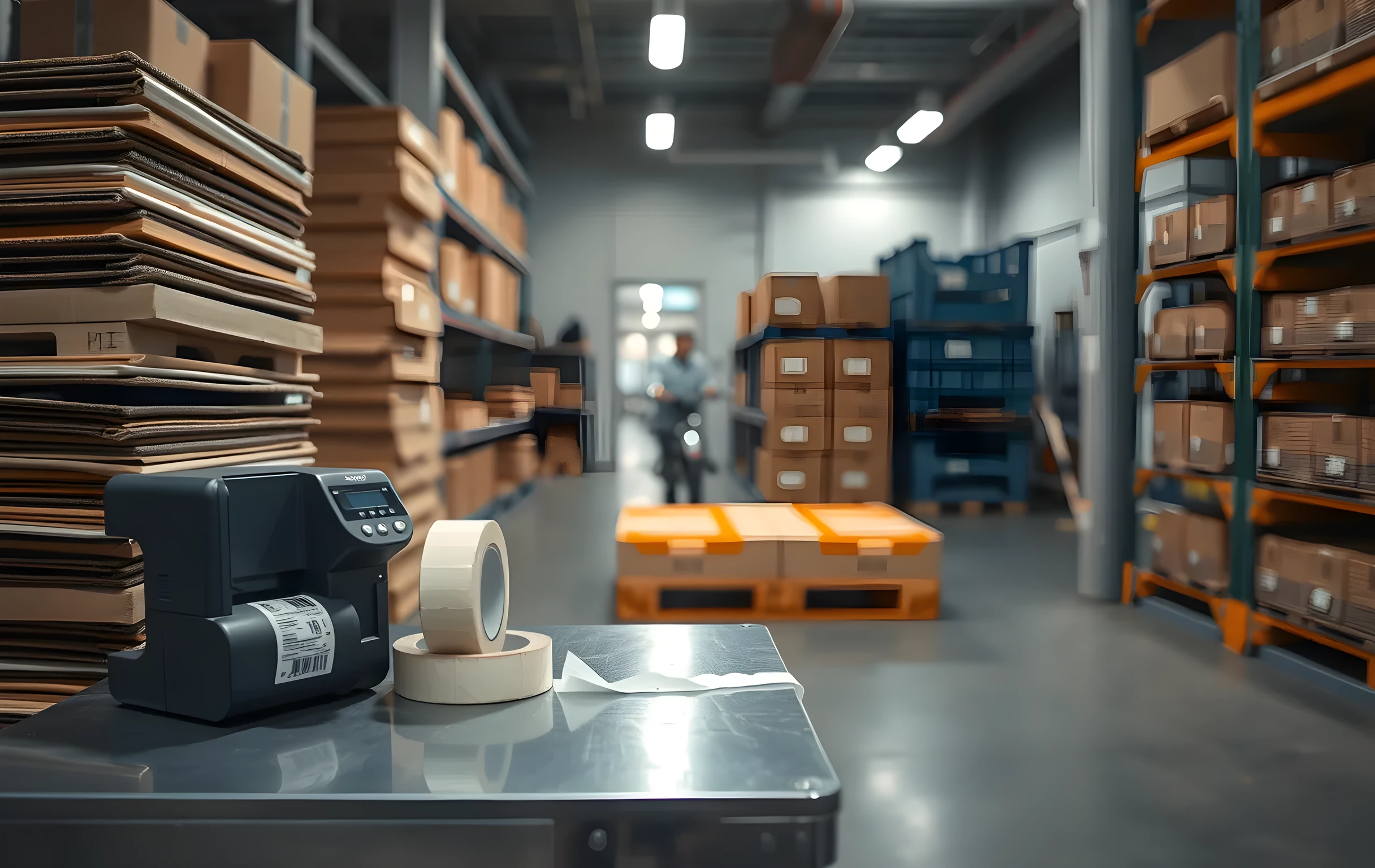
In-house fulfillment means you rent or own the space, hire the staff, buy the racking and packing equipment, and manage the order flow yourself. At 50 orders per day, your all-in cost might be 1.50 to 3.00 dollars per order if you are the one picking and packing at a home-office desk with a label printer and a UPS drop-off run twice a week. The trade-off is that every hour you spend on fulfillment is an hour not spent on product development, customer communication, or marketing. At 50 orders a day that is maybe 4 to 6 hours of your time; at 300 orders it is a full-time hire plus management overhead, and the cost per order creeps up to 2.50 to 4.50 dollars once you factor in benefits, training, and turnover.
A third-party logistics partner (3PL) takes the physical work off your plate. You ship inventory to their warehouse, they store it, pick it when an order hits, pack it, and hand it to a carrier. Published rates for mid-market 3PL services run 2.00 to 5.00 dollars per order for pick-and-pack (before storage, which is typically 0.50 to 1.20 dollars per cubic foot per month), plus receiving fees for inbound freight and a monthly minimum that can range from 500 to 2,500 dollars depending on the provider. The trade-off is flexibility: most contracts have 90-day or annual commitments, and if your volume drops 40 percent you are still paying the base fee. You also lose direct visibility into how fast a picker is moving through your bins, which matters when a customer is asking where their order is.
The retail-adjacent model is what Staples itself uses for its e-commerce channel: the physical stores double as micro-fulfillment points for local orders, and the regional DCs handle bulk. For a small operator, the analogous move is using a co-packing partner, a shared-warehouse facility (where you rent a few pallet positions among other tenants), or even a print-on-demand network if your product is simple. The cost per order in a shared warehouse can drop to 1.50 to 3.00 dollars because you are splitting the overhead with 20 to 40 other brands, but you lose dedicated pick-path optimization and your SKUs get mixed into a larger picking flow that may be slower than a dedicated line.
The Questions That Separate a Real Partner From a Brochure
Before you sign anything, ask the provider to walk you through a single order end-to-end and time each step. Not their average throughput number from a sales deck, but one specific SKU picked from bin A-14-3 at 2:15 PM on a Tuesday with 12 other orders in the queue. How many minutes from order confirmation to sealed box? How many minutes to carrier pickup? Where does the tracking number get generated and how long does it take to appear in your storefront? If they cannot answer those questions with specific times rather than ranges, you are talking to a marketing department, not an operations team.
Second, ask about their exception rate and what happens when it fires. What percentage of orders ship with the wrong item, a missing accessory, or damage in transit? How is the customer notified, who pays for the replacement shipment, and how long does the restocking take? A facility that ships 99.2 percent accuracy on paper but takes four business days to process a discrepancy will cost you more in support tickets and lost repeat purchases than a facility that ships 98.5 percent accuracy but resolves issues within two hours. The support-side cost of a bad fulfillment experience (the email, the call, the refund, the re-ship) routinely runs 3.00 to 6.00 dollars per incident when you include the customer-service labor.
Third, and this is where findability becomes a real operational metric: can your customers actually find what they ordered in your inventory? If a shopper searches your store for a specific product variant and it does not appear in the first page of results because your catalog data is stale or your search index is outdated, no amount of fulfillment speed matters. The order never gets placed. This is why the best operators now treat their product-data pipeline as part of the fulfillment stack: accurate, current, searchable inventory information that shows up when a customer (or an AI assistant answering on their behalf) asks for it. Tools that map your entire order flow from cart to doorstep and flag where data goes stale or where a step adds untracked delay have become standard in how serious operations teams audit their own cost-per-order math.
What Changed When AI Search Became the Default Lookup
A year ago, a customer who could not find a product on your site would call or email support. Today they ask a chatbot, an AI assistant, or simply search in a tool that synthesizes answers from multiple sources. If your product page is thin, your inventory status is out of sync, or your shipping-time language is vague, the AI-generated answer will say something like ships in 5 to 10 business days from a regional warehouse and that is all the customer sees. They move on. The fulfillment center does not even get the order.
This shifts the baseline for what a good fulfillment operation looks like. It is no longer enough to pick fast and ship on time; the information layer around your inventory has to be accurate, current, and discoverable in the places where buyers now start their search. Operators who treat their product-data feed as a first-class system (updating stock levels within minutes of a sale, reflecting real transit times rather than optimistic defaults, and keeping variant-level detail clean) see measurably fewer abandoned carts and support tickets because the answer the customer gets before they ever reach your site is already correct.
The practical takeaway: when you are evaluating a fulfillment partner or building your own operation, include the information pipeline in the scope. Ask who owns the inventory-data sync, how often it fires, and what happens when a SKU goes out of stock mid-fulfillment. If the answer is a batch update every six hours, you have a gap that will show up as mismatched expectations, refund requests, and lost repeat business. The cost of that gap is not in the warehouse; it is in the customer who never comes back because the information they were given did not match what arrived.