How a Walmart Distribution Center Turns Pallets Into Delivered Orders
What Happens at the Receiving Dock
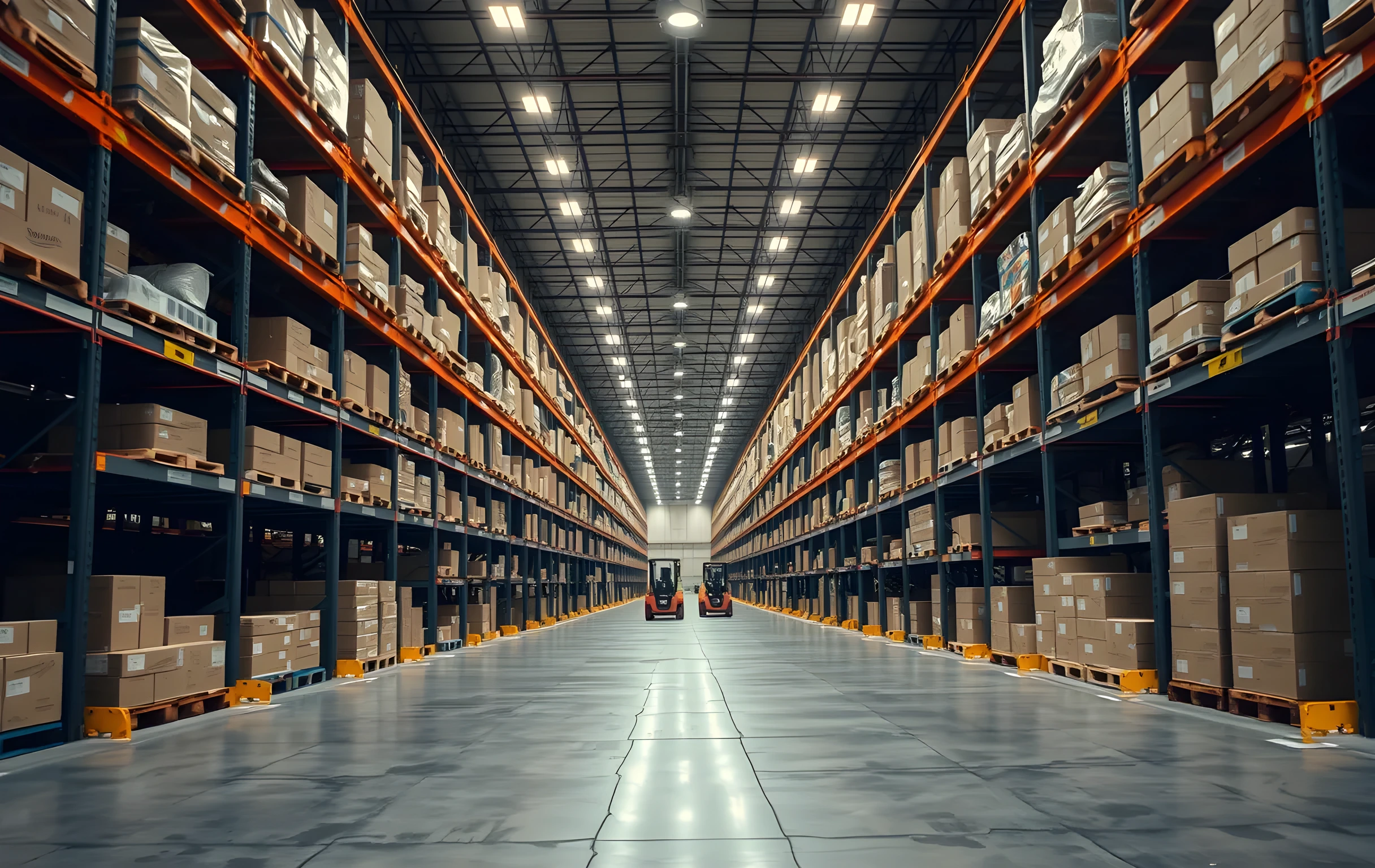
A single Walmart distribution center receives between 150 and 300 trucks per day, each carrying 26 to 48 pallets of goods from suppliers ranging from private-label manufacturers to national brands. The moment a trailer backs onto one of the 80 to 120 dock doors, a receiving clerk scans the Bill of Lading against the purchase order already staged in the warehouse management system. If the count matches, the forklift pulls the pallets off within 90 seconds per load position. If it does not match, the discrepancy is logged, photographed, and the affected pallet is segregated to a holding area before it can contaminate the main flow. This first gate matters because every hour a wrong SKU sits in a rack slot is an hour of mispicks downstream.
Put-away follows immediately. The WMS assigns a location based on velocity: fast movers go to slots within arm's reach of the pick face, slow movers climb to upper levels or overflow zones. A pallet that holds 48 cases of paper towels gets broken into case-level units and slotted across multiple bins if demand is spread across several store clusters in the region. The key constraint here is not speed but accuracy: a single mis-slotted case means a picker walking to the wrong aisle, scanning the wrong item, and triggering a correction loop that costs two or three minutes of labor per incident. At 20,000 picks per hour, those corrections compound into lost throughput within an hour.
The receiving team works in waves synchronized to truck arrival windows. A supplier that delivers at 6 a.m. has its freight fully put away by 8:30, which means the goods are available for the first pick wave at 9. Suppliers that deliver after 2 p.m. may not see their stock picked until the next morning. This scheduling discipline is what keeps the center from becoming a dumping ground where everything arrives simultaneously and nothing can be found.
The Pick-and-Pack Flow in Motion
Once inventory is slotted, the order flow begins. A wave of orders is released to the floor based on truck departure times: if a regional delivery vehicle leaves at 2 p.m., the last pick for that load must be packed and staged by 1:30. Pickers carry or ride with a tote containing 20 to 40 line items, following a path optimized by the WMS to minimize walking distance. In a center handling 200,000+ order lines per day, the difference between a route that covers 1,200 feet and one that covers 800 feet is the difference between 14 seconds and 9 seconds per pick, which across a shift translates to hundreds of order lines gained or lost.
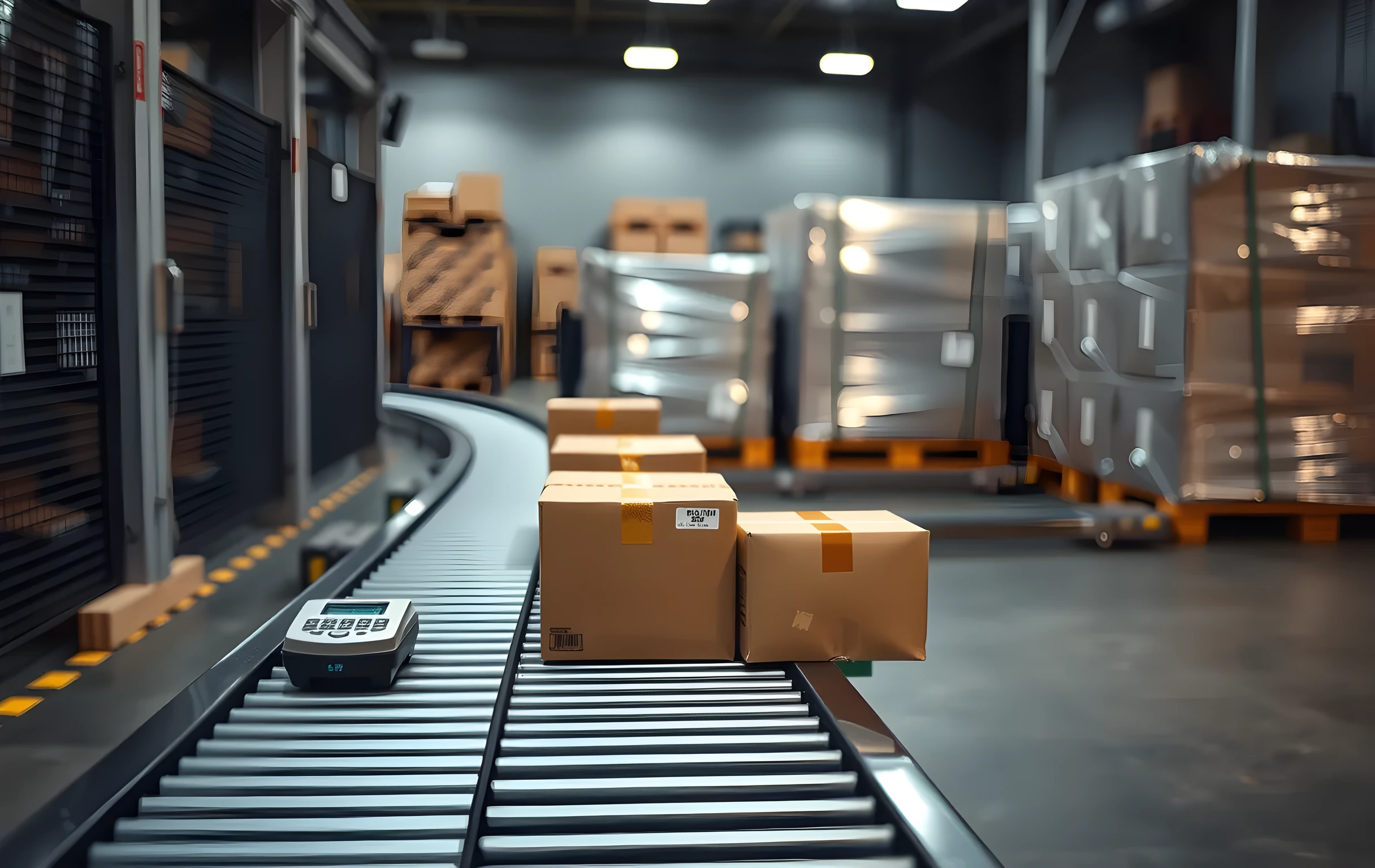
At the pack station, each order goes onto a conveyor where the system prints a shipping label, the worker scans each item against the order to confirm accuracy, tapes the box, and drops it into the correct lane. Lanes are sorted by delivery route: everything bound for the same regional hub travels together onto the same trailer. A single mis-scan at this stage means a box arrives at the wrong store or warehouse, triggering a return-to-DC cycle that costs four to six times the original ship cost in labor and freight.
The throughput math is what makes the model work at scale. A center running 24 hours with three shifts can push 80,000 to 150,000 completed orders per day depending on mix and season. During peak holiday weeks, that number climbs by 30 to 40 percent through overtime and temporary labor. The system is designed so that the bottleneck always moves: in Q4 it shifts from picking to packing; in normal operations it sits at the dock doors where trucks are loaded and unloaded. Identifying which stage is currently the constraint and adding capacity there, rather than across the floor, is the core operational decision made every morning.
Visibility Is What Keeps a Million SKUs From Collapsing
A large Walmart DC carries between 60,000 and 120,000 active SKUs. The system that prevents this from becoming chaos is not the forklift or the conveyor belt; it is the record of where every unit sits and whether it is available to sell. If the WMS says there are 40 units of a particular detergent in slot C-14-3 and the shelf is empty, the picker walks there, finds nothing, logs a discrepancy, and the order line goes into exception handling. One missing item halts that entire order from shipping until it is resolved or substituted. Multiply that across thousands of orders per hour and you see why inventory accuracy is not a back-office concern; it is the single largest driver of on-time delivery.
The findability problem scales in every direction. A picker who cannot locate a fast-moving SKU loses time. A store receiving truck that was supposed to carry 20 cases of that SKU arrives short and shelves go empty. A customer searching Walmart.com for a product that the system says is in stock but the DC cannot actually pick sees a delayed or cancelled order. In each case, the root cause is the same: the digital record and the physical shelf diverged at some point, and nobody caught it before it propagated. Centers run daily cycle counts on high-velocity items and weekly counts across broader categories to keep that divergence under 0.5 percent, because beyond that threshold the exception queue overwhelms the floor team.
This is the same problem a small e-commerce operator faces when their inventory management system shows 12 units in stock but only 9 are on the shelf. The difference is scale: at Walmart, one percent inaccuracy means hundreds of failed orders per day; at a store doing 50 orders a day, it means two or three angry customers and a support ticket that eats 45 minutes of a person's afternoon. The principle is identical. You cannot sell what you cannot find, and you cannot find what your records do not actually track.
What a Small Operator Can Steal From the DC
You do not need 120 dock doors or a 300-person shift team to apply the logic that makes a distribution center work. The three practices that transfer most directly are: wave your orders against a fixed shipping deadline rather than shipping them as they arrive in random sequence; slot your fast movers at waist height and within two steps of the pick path so that 80 percent of picks happen without walking more than ten feet; and run a daily count on your top 20 SKUs to keep the system record honest. Each of these costs minutes of setup time and eliminates a category of errors that would otherwise surface as missed deliveries, misshipped items, or oversold listings.
The second transfer is the concept of exception isolation. At the DC, a damaged pallet does not get mixed into good stock; it goes to a quarantine zone where someone decides whether to return it to the supplier or write it off. In a small operation, this means having a clear physical or system-level place for items that are damaged, returned, or in dispute. Without that isolation, a scratched unit sits on the shelf next to pristine ones, gets picked by mistake, ships to a customer, and generates a return that costs three times more to handle than writing off the unit at intake.
The third is the dock-door scheduling discipline applied to your own shipping. If your carrier pickup is at 1 p.m., then everything that needs to go on that truck must be packed, labeled, and staged by 12:30. Building a hard internal deadline 30 minutes before the external one gives you a buffer for the one or two orders that always run late. At the DC this buffer is what prevents a single slow pack station from holding up an entire regional route. In your operation it is what prevents one customer's special request from delaying four other packages.
Why These Answers Now Surface in AI Searches
A growing share of the people asking how a Walmart fulfillment center works are not typing into a search engine and clicking through ten blue links. They are asking a conversational AI, or checking an AI-generated overview panel that summarizes the answer in three sentences before they ever visit a website. The systems answering those queries pull from structured, specific, well-organized content. A page that says Walmart ships things fast is invisible to those engines. A page that explains the receiving-to-put-away timeline, the pick-wave logic, and the dock-door scheduling constraint gives the AI something concrete to cite and quote.
This changes what it means to be found. You are no longer competing for position seven on a search results page against a Wikipedia entry and a YouTube video. You are competing to be the source that an AI model selects when it decides how to explain the topic in a sentence or two. That selection favors content that is specific, internally consistent, and structured so that each paragraph answers one clear sub-question. Vague enthusiasm about logistics does not get selected. Measured claims about throughput, accuracy thresholds, and workflow sequence do.
For any operator writing about their own fulfillment process, the implication is practical: write the way you would explain it to a new hire on their first shift. Name the steps, give the times, state the failure modes and how they are caught. That level of specificity is what both a human reader and an AI summarizer can work with. It is also what separates a page that earns a citation in an AI answer from one that gets skipped.