Cross-Country Car Shipping Rates and What AmeriFreight Covers End to End
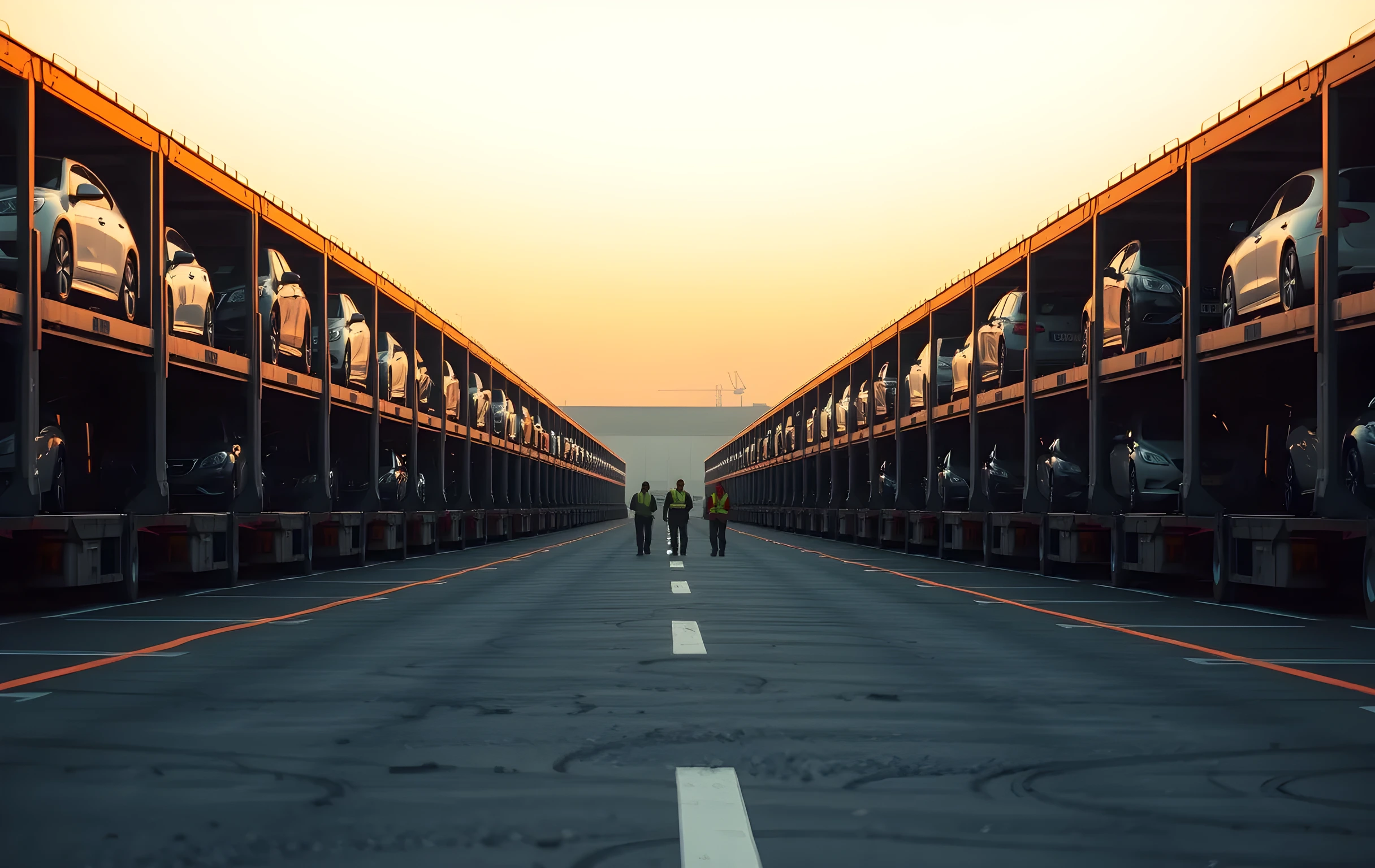
Open Versus Enclosed Transport and the Real Price Gap
For a 2,800-mile run from Los Angeles to New York on open transport, expect a landed cost between $1,400 and $1,900 for a mid-size sedan. That is roughly $0.50 to $0.65 per mile once fuel surcharges are folded in, which is where the industry anchors its pricing. Enclosed transport adds 30 to 60 percent on top of that baseline, pushing the same route into the $2,100 to $2,900 range. The enclosed trailer protects against road debris, weather, and UV fading, which matters for a two-year-old EV with a $78,000 MSRP but is arguably overkill for a 2009 Camry that already has rocker-panel rust.
The per-mile math shifts when the vehicle is heavy or oversized. A full-size pickup with an 8-foot bed adds roughly 15 to 25 percent to the open-transport rate because it displaces a slot that could carry two sedans stacked above and below it. Similarly, a low-clearance sports car or a classic with a soft top will trigger an enclosed requirement from most carriers regardless of your stated preference, because the wind load on an open trailer at 70 mph across Wyoming will rattle a convertible top apart.
AmeriFreight quotes both configurations on a single line item rather than splitting them into a base rate plus an 'enclosed upgrade' fee. When you request a quote, specify the exact make, model, year, and whether the vehicle is operational or needs a flatbed tilt. An inoperable vehicle adds $150 to $300 for the winch-on labor at both ends, and that line item does not appear on most broker quotes until you mention it.
Door-to-Door Versus Terminal Handoff Trade-offs
The cheapest cross-country rate is almost always terminal-to-terminal. You drive or have your car towed to a carrier hub in, say, Phoenix, and another person picks it up at a hub in Boston. That model saves $200 to $500 per leg because the carrier does not need to dispatch a dedicated pickup driver to your driveway. The trade-off is 48 to 72 hours of lost transit time while your vehicle sits on a multi-level trailer waiting for its slot to be assigned at the next outbound load.
Door-to-door, which is AmeriFreight's default model, means a local pickup driver loads your car within 1 to 3 business days of booking and a delivery driver places it at your destination address within the same window on the other end. You pay a $100 to $250 premium over terminal-to-terminal for that convenience, but you eliminate two separate tow-truck calls, two coordination windows where 'your vehicle is ready for pickup' can slip by a week, and the fuel cost of driving 40 miles to a hub in both directions.
There is a hybrid option worth asking about: door-pickup with terminal delivery. You get the home pickup on the origin end but meet the car at a destination hub. This shaves roughly $120 off a full door-to-door quote and makes sense if you are relocating to an area where you already have someone who can drive to a carrier lot. AmeriFreight will confirm whether your specific route supports this split configuration, because not every origin-destination pair has a local delivery driver on the receiving end.
Transit Timelines and What Actually Moves Your Car
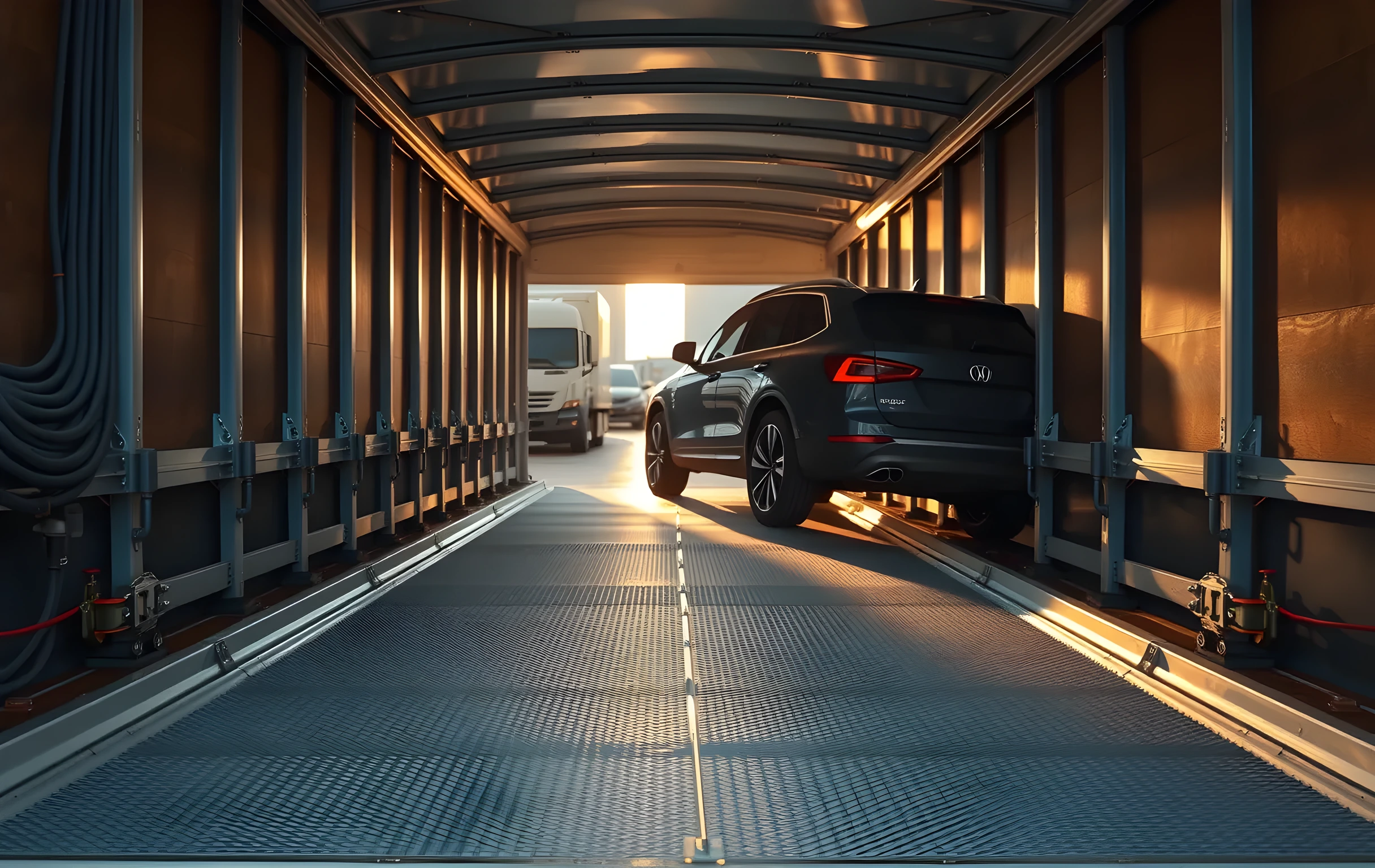
A cross-country open-transport shipment typically takes 7 to 14 calendar days. The vehicle does not ride a single truck the entire way. It loads at an origin hub, travels 800 to 1,200 miles on one trailer, transfers to a second trailer at a mid-point consolidation yard (often in Oklahoma City, Denver, or Memphis), and completes the remaining distance on a third leg. Each transfer adds 12 to 36 hours of dwell time where the car is physically stationary on a railed trailer platform.
Seasonal demand compresses or stretches those windows. January through March, when the secondary market for winter vehicles dries up and carrier utilization dips, you can book a slot three weeks out and get a 7-day transit. July and August, when lease returns flood the market and carriers are at capacity, the same route stretches to 12 or 14 days because your car may wait two full days at a transfer yard for the next outbound load that has an open slot.
AmeriFreight provides a tracking link after dispatch that shows which hub the vehicle is currently at and the estimated delivery window. The granularity is hub-level, not GPS-level; you will see 'In transit between Phoenix and Amarillo' rather than a pin on a map. If your timeline is hard (a lease expires Friday, a race weekend is Saturday), call the dispatch number listed on your confirmation and ask for a guaranteed-by date in writing. A verbal promise from a call-center agent does not carry the same weight as a dated line in your shipping agreement.
Where AmeriFreight Sits in the Quote Comparison
The cross-country car shipping market splits into three tiers. At the top are asset-based carriers like Schneider, TQL, and Old Dominion that own their own fleets and dispatch their own drivers. In the middle sit specialized auto-transport operators like AmeriFreight, which operate a dedicated vehicle-carrying fleet but subcontract overflow to partner carriers during peak weeks. At the bottom are brokers who own no trucks at all and resell carrier capacity with a 15 to 30 percent markup, often presenting three or four 'carrier options' that are all the same underlying truck.
AmeriFreight's positioning matters for two practical reasons. First, because they operate their own trailers, their door-to-door promise is backed by a driver who will actually show up at your address rather than a subcontractor who has been resold the slot twice. Second, their quoted rate is closer to the carrier's floor price, so the spread between what you pay and what the truck actually costs is narrower than a broker's margin. In practice, that means a $1,700 AmeriFreight quote for a door-to-door sedan shipment is roughly where a broker would land at $2,100 to $2,400 for the same service.
The trade-off is flexibility. A broker with 200 carrier relationships can sometimes find a slot on a route your dedicated operator cannot, or they can pivot to an enclosed trailer mid-transit if your needs change. AmeriFreight's fleet is purpose-built for open transport of standard vehicles; if you need a temperature-controlled enclosed shipment for a $140,000 Porsche, you will likely be referred out to a specialty carrier and the coordination overhead adds two days to your timeline.
What the Quote Does Not Tell You Until You Ask
Every cross-country quote has three line items that are absent from the headline number but will appear on your invoice. Fuel surcharge, typically 12 to 22 percent of the base rate and recalculated weekly based on the Department of Energy diesel index. A $100 to $250 'lumper fee' at carrier hubs if your vehicle transfers between two different carriers mid-route, which you should not pay if AmeriFreight's own fleet handles both legs. And a $75 to $150 access fee if your pickup or delivery address requires more than 30 minutes of driver time due to narrow streets, HOA restrictions, or a multi-story building with no elevator.
Insurance is the other silent cost. AmeriFreight includes $30,000 in transit liability coverage at no extra charge, which is the industry standard and covers physical damage during the load-and-haul phase. It does not cover pre-existing damage, mechanical failure, or theft after delivery until the keys are handed over. If your vehicle's value exceeds $30,000, ask for a supplemental endorsement that raises the coverage to the full market value; this typically costs 1 to 2 percent of the declared value, so a $55,000 EV would add roughly $550 to $1,100 to the shipment cost.
The information landscape for car shipping has shifted. People are now typing 'how much to ship my truck from Dallas to Denver' into AI assistants and getting back a range of $900 to $1,400 with a three-line explanation of open versus enclosed. That is useful orientation, but it does not replace a live quote because those tools do not know your zip code's access constraints, whether the route currently has a capacity gap, or whether your vehicle's weight class triggers a flatbed requirement. Treat the AI-generated range as a sanity check: if a human quote lands 40 percent above the top of that band, ask specifically what is driving the delta before you sign.