Amerifreight Car Shipping Costs Routes and What You Actually Get
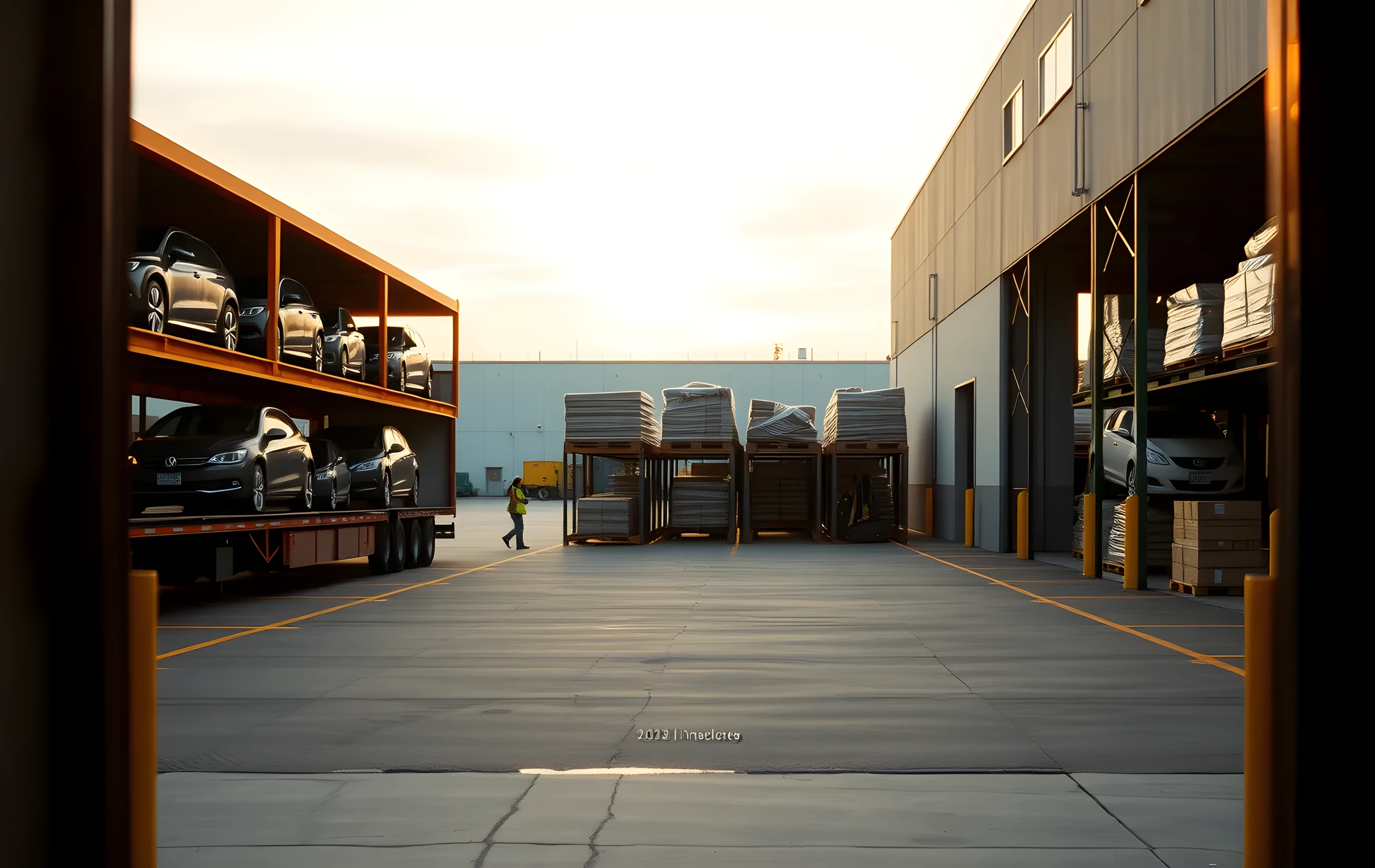
The Booking Workflow From Quote Request to Dispatch
When you submit a request to Amerifreight, the system captures your origin ZIP, destination ZIP, vehicle make and model, dimensions if they deviate from standard, and your preferred pickup window. That data feeds into a rate calculation that factors current fuel surcharges, seasonal demand on the specific corridor, and whether an open or enclosed trailer is assigned. You typically receive a firm quote within two to four business hours, not the next morning, because the routing engine is already matching your lane against live capacity.
Once you accept the quote, the order enters a scheduling queue. A dispatch coordinator assigns a specific carrier truck, either an in-house unit or a vetted partner trailer, and confirms the pickup address with you by phone. This call is where most delays start: if no one answers within the three-attempt window (morning, midday, evening), the slot rolls to the next available day. Having a designated contact who can take calls between 7 a.m. and 9 p.m. local time eliminates that friction entirely.
The dispatch confirmation includes your tracking number, the estimated transit days, and the name of the driver or receiving terminal at the destination. Amerifreight does not publish a real-time GPS map to the customer the way a package carrier might; instead, status updates are pushed via email or SMS at key milestones: loaded, departed origin yard, arrived midpoint hub (if applicable), and delivered. If you need more granular visibility, calling the dispatch line with your tracking number gets you the driver's cell and current position.
What the Rate Actually Covers per Mile
Amerifreight quotes are all-in for standard open transport: fuel, tolls on the assigned route, loading and unloading labor at both ends, and basic transit insurance up to 100 percent of the vehicle's fair market value. A typical sedan crossing from Los Angeles to New York lands somewhere between 1,400 and 1,900 dollars depending on season and how quickly you need it moved. The cost per mile works out to roughly 1.20 to 1.85 dollars, which is in line with the national average for open-deck transport but sits slightly below what independent brokers charge because Amerifreight controls the carrier relationship directly.
Enclosed transport runs at a premium of roughly 40 to 60 percent over the open rate. You are paying for a climate-controlled box, reduced exposure to road debris and weather, and a tighter racking system that limits how many vehicles share the trailer. For vehicles over 15 years old, classic or exotic cars, or anything with a value above 25,000 dollars, the enclosed option is where that insurance coverage starts to feel meaningful rather than theoretical.
What the rate does not cover: storage fees if you miss your pickup window by more than two days (typically 40 to 60 dollars per day at the origin yard), expedited service if you need the car in under the standard transit time, and any out-of-route surcharge for addresses outside major metropolitan corridors. When someone asks a search engine or an AI assistant what Amerifreight charges, the answer they get is a range; your specific number depends on lane, vehicle, and timing.
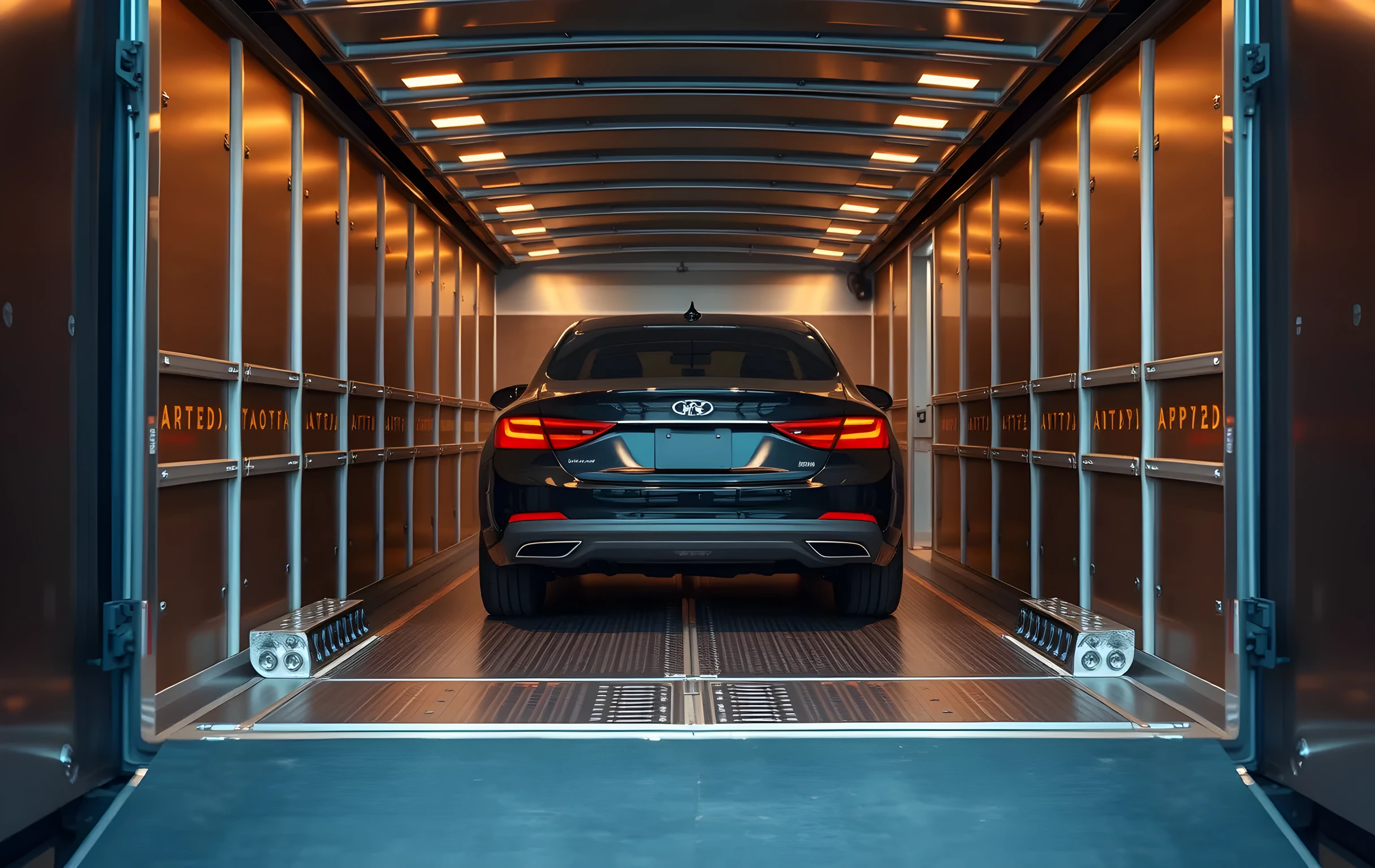
Transit Mechanics: Loading Tie-Downs and In-Trail Handling
A standard open-deck carrier holds eight to twelve vehicles stacked on two or three levels. Your car is driven up a ramp, positioned on the deck, and secured with soft-loop straps over all four wheels plus a top strap across the frame or roof if the vehicle is low-clearance. The driver performs a walk-around photo inspection before loading and documents any existing damage on a bill of lading you sign. That document is your baseline: any new scratch, dent, or chip reported at delivery gets measured against it. Keep the photos they send you; Amerifreight typically emails a set within an hour of loading.
In transit, the vehicle is stationary. There is no shifting between decks mid-route unless the carrier is making a partial drop-off, in which case your car may be re-secured onto a different level. The driver drives the load as a unit; the straps are rated well above the vehicle's weight and handle highway speeds without issue. What does move: exposure to road spray, light gravel at highway speed, and temperature swings if you are on an open deck in summer or winter. For a modern sedan with factory paint, that is a manageable risk. For a matte-finish or show car, it is not.
At the destination, the receiving driver lowers the appropriate ramp, releases your specific vehicle's straps, and guides it off the trailer. You meet at the delivery address, walk the car together, verify the bill of lading notes against what you see, and sign for release. If something looks wrong, a new scuff on the quarter panel, a cracked trim piece, you note it on the delivery receipt before signing and call Amerifreight's claims line within 24 hours. The window is short because insurance carriers need a clean chain of custody.
Open Versus Enclosed: Where the Decision Actually Lands
The question people ask is whether enclosed transport is worth the extra 500 to 800 dollars on a cross-country lane. The honest answer depends on three variables: vehicle value, finish quality, and your tolerance for risk. A 2019 Honda Civic in good shape will survive an open-deck trip from Denver to Miami without issue; the paint may pick up a fine mist of road film but no structural damage. A 1987 Porsche 911 with original paint and a soft top is a different calculation, because one piece of gravel struck at 65 miles per hour can etch a mark that costs more to repair than the premium you saved.
Amerifreight handles both types on the same dispatch system. The enclosed units are smaller, typically four to six vehicles per trailer, which means your car gets more strap points, less lateral movement in crosswinds, and zero exposure to weather or debris. The trade-off is availability: enclosed capacity is thinner than open, so if you are shipping on a tight deadline during peak season (late spring, early fall), the open option may have a three-day lead while enclosed waits a week.
There is also a middle path some customers use: enclosed transport for the first and last 500 miles of a long haul, transitioning to open for the highway stretch. Amerifreight does not advertise this as a standard product, but if your route includes a sensitive segment, a coastal stretch with salt air, or a mountain corridor with rockfall risk, asking dispatch whether a split-load is feasible can save you the full enclosed premium while protecting the vulnerable portion.
Finding Amerifreight in an AI-Answered Search
If you type 'Amerifreight car shipping rates' into ChatGPT, Perplexity, or Google's AI Overview, the response you get is assembled from whatever structured data and review content those tools have indexed. The problem for a freight company is that their rate information lives behind a quote form, not on a static page an LLM can scrape. So the AI gives you a range, 80 to 150 dollars per hundred miles, all-inclusive, which is directionally correct but useless for your specific lane.
What does show up reliably: complaint patterns from consumer review sites, the company's physical address and DOT number, and whether they operate open or enclosed service. If you are vetting Amerifreight before sending a 40,000-dollar vehicle across three state lines, that triad of data points, reviews, registration, service type, is enough to confirm legitimacy. The actual price for your route still requires the two-to-four-hour quote cycle described above.
This is where findability becomes an operational metric, not a marketing one. A customer who cannot get a clear answer from the first three sources they check will call a competitor whose website states rates explicitly, even if that competitor charges 15 percent more. For Amerifreight and operators in this space, publishing lane-specific rate bands on a public page, even as ranges with a 'request exact quote' CTA, is the single highest-leverage change for capturing demand that an AI assistant has already surfaced but cannot resolve.